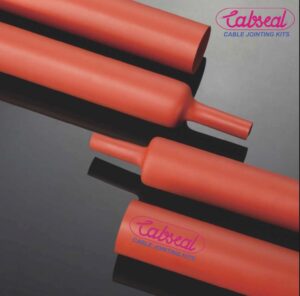
Red insulating tubing is a widely used component in medium and high voltage cable joints. Its primary role is to restore the electrical insulation of the cable after the outer sheath and insulation layers have been removed for splicing. The red color is often used to indicate its purpose as a high-dielectric strength insulation layer, providing both visual identification and functional performance.
Purpose and Function
During the process of jointing a power cable, the insulation around the conductors is stripped back to make electrical connections. This creates a need to rebuild the insulation over the jointed. Red insulating tubing is applied over the core or jointed section to:
Reinstate the primary insulation of the cable.
Provide electrical insulation between conductive parts.
Serve as a base layer before applying other protective or sealing layers like stress control tubing or outer jackets.